
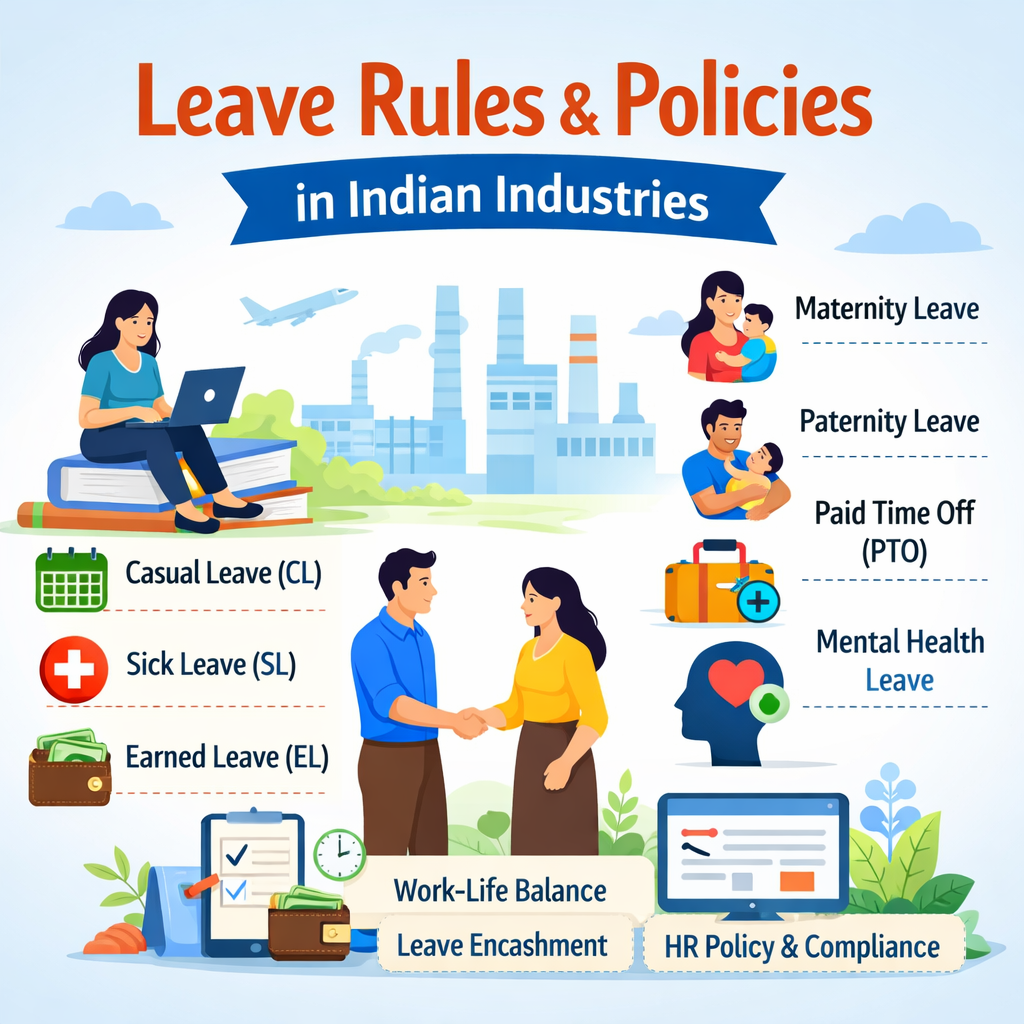
Leave Rules and Policies for a Better Work Environment in Indian Industries
In today’s competitive business environment, employee satisfaction and productivity is the major moto. One of the most critical yet often overlooked aspects of human resource management is a well-structured leave policy. In Indian industries, leave rules are not just about compliance—they play a vital role in maintaining work-life balance, improving employee morale, and ensuring long-term organizational growth.
Understanding the Importance of Leave Policies
Leave policies are not merely administrative rules; they are strategic tools that influence employee engagement and retention. When employees feel they have sufficient time to rest, recover, and manage personal responsibilities, they tend to perform better and remain loyal to the organization.
A good leave policy helps in:
- Reducing employee burnout and stress
- Improving productivity and focus
- Enhancing job satisfaction
- Ensuring legal compliance
- Building a positive workplace culture
Organizations that ignore proper leave structures often face higher attrition rates, low morale, and decreased efficiency.
Legal Framework Governing Leave in India
Before designing any leave policy, it is essential to understand the legal framework in India. Various labor laws govern employee leave entitlements depending on the nature of the business and state regulations.
Key legislations include:
- Factories Act, 1948 (for manufacturing units)
- Shops and Establishments Act (varies by state)
- Maternity Benefit Act, 1961
These laws define minimum leave entitlements, working conditions, and employee rights. While companies can offer more benefits than the law requires, they cannot go below the statutory minimum.
Types of Leave in Indian Organizations
A well-balanced leave policy includes different types of leave to address various employee needs. Below are the most common categories:
1. Casual Leave (CL)
Casual Leave is provided for short-term personal needs or emergencies. Employees can use it for tasks like attending family functions, handling urgent work, or taking a short break.
Typical structure:
- 6 to 12 days per year
- Cannot usually be carried forward
- Requires prior approval except in emergencies
Casual leave ensures flexibility without affecting long-term leave balances.
2. Sick Leave (SL)
Sick Leave is granted when employees are unwell or need medical attention. It is essential for maintaining employee health and preventing workplace illness spread.
Typical structure:
- 6 to 12 days per year
- Medical certificate required for extended leave
- Usually not encashable
Providing adequate sick leave demonstrates that the organization values employee well-being.
3. Earned Leave / Privilege Leave (EL/PL)
Earned Leave is accumulated over time based on the number of days worked. It is often used for planned vacations or long breaks.
Typical structure:
- 15 to 30 days annually
- Accrues monthly
- Can be carried forward (with limits)
- Eligible for encashment
This type of leave is crucial for long-term rest and rejuvenation.
Statutory Leaves in India
Certain leave types are mandatory under Indian labor laws. Companies must comply with these regulations to avoid legal issues.
Maternity Leave
Maternity leave is a legal right for female employees. It allows them to take time off before and after childbirth.
Key provisions:
- 26 weeks of paid leave (for first two children)
- Option for work-from-home after maternity period (if applicable)
This policy ensures both mother and child receive proper care during critical periods.
Paternity Leave
While not mandatory for private companies, paternity leave is increasingly being adopted as a progressive policy.
Typical structure:
- 5 to 15 days
It promotes gender equality and supports shared parenting responsibilities.
Public Holidays
Organizations must provide national and regional holidays.
Common mandatory holidays:
- Republic Day
- Independence Day
- Gandhi Jayanti
Additionally, companies may include state-specific festivals based on location.
Modern Leave Policies for a Better Work Culture
To create a truly employee-friendly environment, many companies are going beyond traditional leave systems and introducing modern policies.
Paid Time Off (PTO)
PTO combines different leave types into a single pool, allowing employees to use leave as per their needs.
Benefits:
- Simplifies leave management
- Provides flexibility
- Reduces administrative complexity
Mental Health Leave
Mental health is gaining recognition as an important aspect of employee well-being.
Typical structure:
- 2 to 5 days annually
This helps employees manage stress, anxiety, and burnout more effectively.
Birthday Leave
A simple yet impactful initiative where employees get a day off on their birthday.
Benefits:
- Boosts morale
- Enhances employee satisfaction
Marriage Leave
Employees are granted leave during their wedding period.
Typical structure:
- 3 to 7 days
Bereavement Leave
This leave supports employees during the loss of a close family member.
Typical structure:
- 3 to 5 days
It reflects compassion and empathy in organizational culture.
Essential Leave Rules and Guidelines
Apart from defining leave types, organizations must establish clear rules to ensure smooth operations.
Leave Approval Process
- Employees should apply in advance for planned leaves
- Emergency leaves can be approved retrospectively
- Managers should ensure minimal disruption to work
Using HRMS software for leave requests and approvals can streamline this process.
Leave Carry Forward Policy
- Earned Leave can be carried forward with a cap (usually 30–45 days)
- Casual and Sick Leave generally lapse at year-end
This prevents excessive accumulation and encourages employees to take breaks.
Leave Encashment
Employees may be allowed to encash unused earned leave:
- During resignation
- At the end of the year (depending on policy)
This adds financial value to leave benefits.
Sandwich Leave Policy
This rule counts holidays or weekends between leave days as part of leave.
Example:
If an employee takes leave on Friday and Monday, Saturday and Sunday may also be counted as leave. However, many modern companies are moving away from strict sandwich policies to improve employee satisfaction.
Best Practices for an Effective Leave Policy
A well-designed leave policy is not just about rules—it is about creating a positive employee experience.
1. Transparency
Clearly document and communicate leave policies to all employees. Avoid ambiguity to prevent misunderstandings.
2. Flexibility
Allow employees to choose how they use their leave. Flexible policies increase trust and engagement.
3. Fairness
Ensure equal leave benefits across all levels of employees. Avoid discrimination or bias.
4. Encourage Leave Utilization
Employees should be encouraged to take their leaves instead of hoarding them. Regular breaks improve productivity.
5. Use Technology
Implement HRMS software to manage:
- Leave balances
- Approval workflows
- Reports and analytics
This reduces manual errors and improves efficiency.
Industry-Specific Leave Variations
Different industries may require customized leave structures based on their operational needs.
IT and Corporate Sector
- Flexible working hours
- Work-from-home options
- PTO-based leave system
Manufacturing Sector
- Strict adherence to labor laws
- Structured leave schedules
- Shift-based leave planning
Retail and Service Industry
- Rotational weekly offs
- Limited peak-season leaves
- Compliance with state laws
Recommended Ideal Leave Structure
An ideal leave policy for Indian organizations could look like this:
- Casual Leave: 8 days
- Sick Leave: 8 days
- Earned Leave: 18 days
- Public Holidays: 10 days
- Optional Leave: 3–5 days
This structure balances employee needs with business continuity.
Impact of a Good Leave Policy on Business Growth
Organizations that invest in employee well-being through effective leave policies experience multiple benefits:
- Higher employee retention
- Increased productivity
- Strong employer branding
- Better workplace relationships
Employees who feel respected and valued are more likely to contribute positively to organizational success.
Conclusion
A well-structured leave policy is a cornerstone of a healthy work environment in Indian industries. It is not just about granting time off—it is about creating a culture of trust, respect, and balance. By combining statutory compliance with modern, flexible leave practices, organizations can build a workplace where employees feel motivated, supported, and engaged. In the long run, such policies not only benefit employees but also drive sustainable business growth.

Compugraphs Creative Team
Authors and Content Writers.