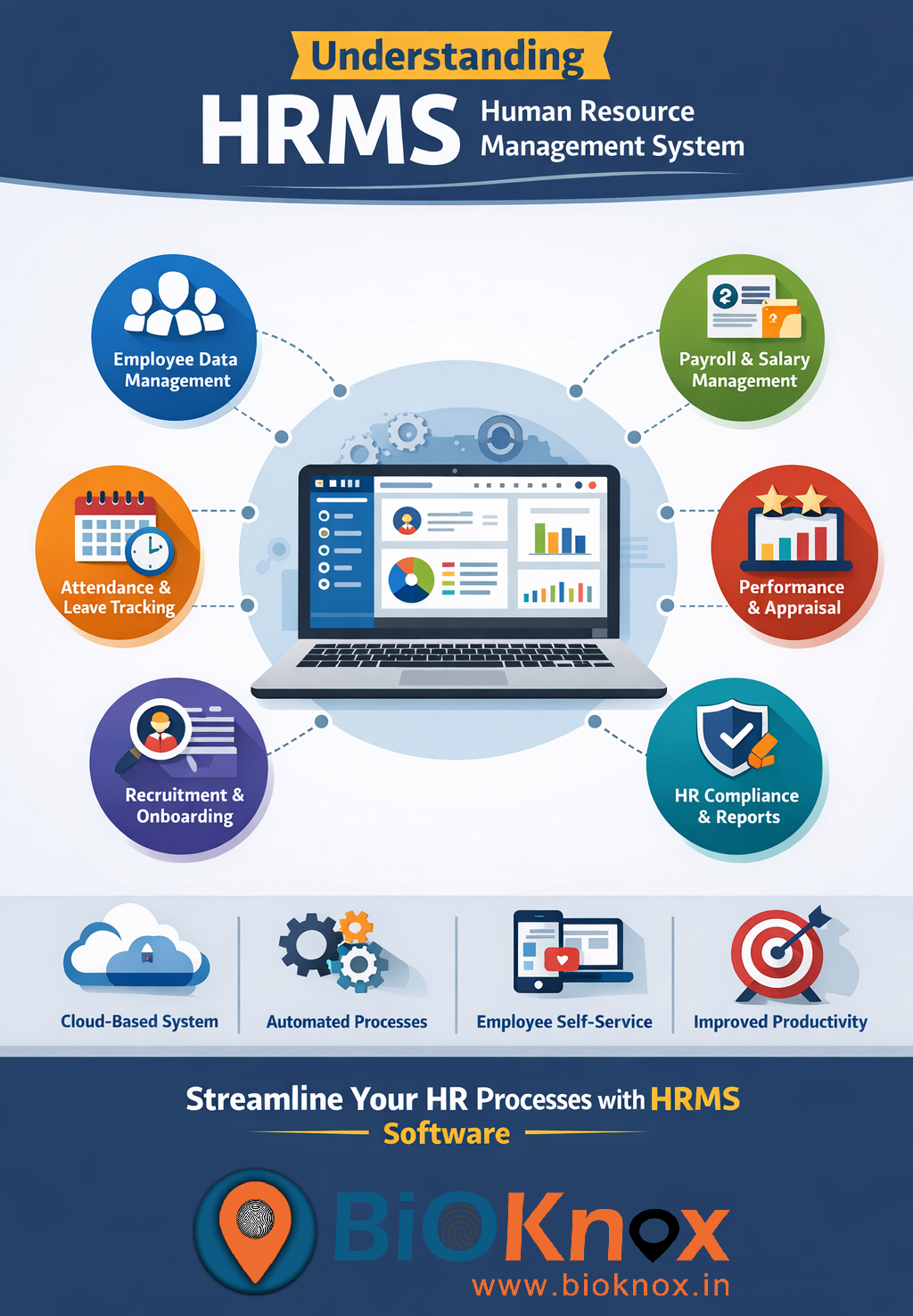
What Is HRMS Software and Why Every Company Needs It
In today’s fastest growing business environment, managing employees efficiently is crucial for organizational success. Companies are constantly looking for ways to streamline HR operations, reduce manual work, and improve workforce productivity. This is where HRMS software plays a vital role.
A Human Resource Management System (HRMS) helps organizations automate and manage their human resource processes such as employee data management, payroll, attendance, leave tracking, and performance evaluation. By using HRMS software, companies can simplify HR tasks, improve accuracy, and focus more on strategic workforce management.
What Is HRMS Software?
HRMS (Human Resource Management System) is a digital software solution designed to manage and automate various HR functions within an organization. It integrates multiple HR processes into a single platform, enabling HR teams to efficiently handle employee information, payroll processing, attendance tracking, leave management, recruitment, workforce management, employee financial modules and performance evaluation. Modern HRMS systems are usually cloud-based and accessible from anywhere, allowing HR professionals and employees to access important information anytime anywhere as per their requirement basis.
Key Modules of HRMS Software
Most HRMS systems include several essential modules that help organizations manage their workforce efficiently.
1. Employee Information Management
HRMS maintains a centralized database of employee details such as personal information, qualification details, last works experience, current job roles & designation, soft copy of all documents, salary structure, and employment history. This eliminates the need for maintaining multiple spreadsheets and documents.
2. Attendance and Leave Management
HRMS software can track employee attendance through biometric devices, mobile applications, or web portals. It also manages leave requests, approvals, and balances automatically.
3. Payroll Management
Payroll processing becomes much easier with HRMS software. Once the HR finalize the attendance and leave of the employee, then it calculates salaries, deductions, tax components, and generates pay slips automatically.
4. Recruitment and Onboarding
The management of the recruitment data is a task of bundles for a HR. The HRMS helps HR teams manage the hiring process by tracking job applications, scheduling interviews, and onboarding new employees efficiently.
5. Performance Management
The KRA & KPI of an employee manage a vital role for his performance tracking, the Organizations can track employee performance, set goals, conduct appraisals, and monitor productivity using the HRMS tools.
6. Employee Self-Service Portal & App
The relation between the Employee & Employer will only survive if there is a complete transparency exist. By using the ESS Portal and mobile apps of the HRMS the Employees can access their information, apply for leave, download pay slips, and update personal details.
Why Every Company Needs HRMS Software
1. Automates HR Operations
Manual HR processes are time-consuming and prone to errors. HRMS software automates routine tasks such as payroll processing, attendance tracking, and employee data management.
2. Improves Accuracy and Compliance
Calculation of Attendance, Leave, Payroll, tax deductions, and statutory compliance can be handled accurately with HRMS software, reducing the risk of human errors.
3. Saves Time and Operational Cost
By automating HR tasks, companies can reduce administrative workload and allow HR professionals to focus on strategic activities like employee engagement and talent development.
4. Enhances Employee Experience
With employee self-service portals, employees can access HR services easily without depending on HR staff for every request. Application to approval all modules can be done through it.
5. Centralized Data Management
HRMS stores all employee information in one centralized system, making it easier to access, update, and analyze workforce data.
6. Supports Business Growth
As organizations grow, managing employees manually becomes difficult and tedious task. HRMS software helps companies scale their HR operations efficiently.
Benefits of HRMS Software for Businesses
Implementing HRMS software offers several advantages for organizations:
- Efficient employee management
- Automatic Attendance & Leave Management
- Automated payroll processing
- Better workforce planning
- Improved HR compliance
- Enhanced employee engagement
- Accurate HR reporting and analytics
These benefits help companies improve productivity and maintain better control over their workforce.
HRMS Software for Small and Large Businesses
HRMS solutions are suitable for companies of all sizes. Small businesses can use HRMS to simplify HR operations and reduce manual workload, while large enterprises can manage complex workforce structures and multi-location employees effectively.
Cloud-based HRMS systems are particularly beneficial because they allow organizations to access HR data remotely and integrate with other business systems.
The Future of HR Management with HRMS
With the increasing adoption of digital technologies, HR departments are rapidly transforming. Modern HRMS solutions now include features such as mobile access, advanced analytics, automation, and AI-driven insights.
Companies that adopt HRMS software gain a competitive advantage by improving workforce efficiency and enabling data-driven HR decisions.
Conclusion
HRMS software has become an essential tool for modern businesses. It simplifies HR operations, improves accuracy, enhances employee experience, and helps organizations manage their workforce more effectively.
By implementing the right HRMS solution, companies can streamline their HR processes, reduce administrative burden, and focus on strategic growth.
If your organization wants to improve HR efficiency and workforce management, adopting a reliable HRMS software solution can be a smart investment for long-term success.

Compugraphs Creative Team
Authors and Content Writers.